The Islamic Republic of Iran, Part II
Flash Update.

Some quick thoughts:
Last week, I wrote that U.S. military action against Iran was highly likely. As of the time of writing, given recent signaling by U.S. politicians, Trump’s Truth Social account, and the move in Brent ($65.63), it seems almost inevitable.
We’ve seen this song and dance before last June, though the risks are more acute now given that, for the Islamic Republic, regime survival is at stake due to the turmoil on the streets.
There’s still a chance of a climbdown, as GCC states are almost certainly deploying their considerable diplomatic and lobbying power (and checkbooks) to assuage Trump’s reported appetite for action.
Some think a U.S. strike would be largely symbolic. I disagree. Given the economic and strategic importance of the region, and Iran’s demonstrated capacity and willingness to retaliate, a symbolic U.S. strike would necessarily have to simultaneously weaken Iran’s counterattack ability. That means hitting Iranian drone and missile launchers and stockpiles. Go big or go home, else the risk of drawn out regionalized conflict dramatically increases.
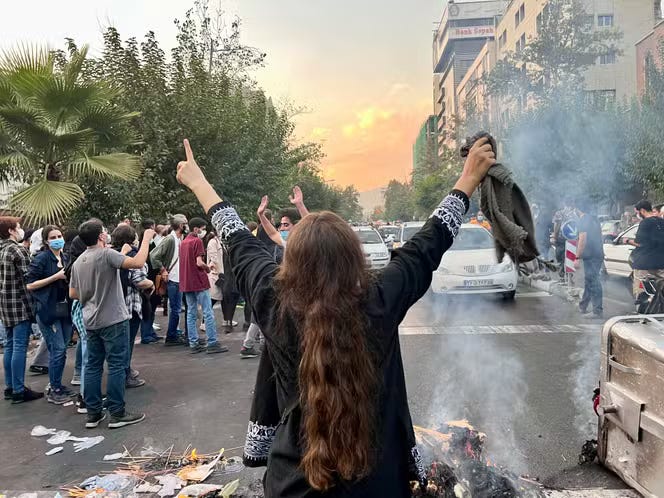
Protests in Iran have escalated in scale and severity. That they are aimed at broad socioeconomic conditions rather than narrow asks on morality law enforcement or an election outcome is concerning to all factions in the Islamic Republic. As I’ve noted in Iran, Part I, the Islamic Republic is not a consolidated top-down regime but rather a delicately orchestrated grouping of competing coalitions. These protests are aimed at socioeconomic externalities emanating from the foundations of this orchestra, but regime elite efforts to meet U.S. demands in exchange for the necessary sanctions relief to address those externalities run into the wall of absolute Velayat Faqih.
The outcome in Iran, whether the U.S. strikes or not, will ultimately turn on the moderate-reformists achieving a critical mass of elite defections to run through Khamenei’s wall of absolute Velayat Faqih, effectively sidelining the most hardline elites, and on what the Artesh does to protect against disruption by hardline remnants during a transitional period.
This past weekend did indeed provide more clarity on the scale of the protests, but not the organization. Pahlavi Jr. has reportedly met with U.S. Envoy Witkoff, likely to lobby for complete regime change with him leading a transition. Despite the considerable media push underway, Pahlavi and the (almost entirely diasporic) Monarchist faction are a red herring, are not the driving impetus of what’s happening, and are unlikely to materially affect the outcome on the ground in Iran. I maintain my position that there is no domestic appetite within Iran for a return to monarchy, and that any U.S. attempts to restore the Pahlavi Dynasty are more likely to result in civil war than a smooth transition.
The government is in a bind. It maintains a core base of support, yes, but socioeconomic issues are the preeminent source of these wide tent protests, not the Islamic Republican project itself. Regime change in the broad political theory sense of the word, not the narrow post-WW2 U.S. foreign policy one, is the most likely outcome. That means a transition from absolute to jurisprudential Velayat Faqih and gradual detente and rapprochement with the U.S. after achieving a critical mass of elite defections, not wholesale dissolution of the Islamic Republican project. Readers of solely Western media, which heavily slants towards the diasporic Monarchist or “all Iranians want the Mullahs gone” viewpoint, will miss this key point.
These protests are not entirely “anti-Mullah” but encompass a broad tent of stakeholders primarily motivated for socioeconomic reasons. Bazaaris and labor union members tilt religious and conservative. Younger generations, and Iran’s demographics do lean young, are largely against the status quo establishment but that doesn’t mean they favor a U.S.-led regime change project. The moderate-reformist faction doesn’t view rapprochement with the U.S. as necessarily “anti-Mullah” or anti-Islamic Republic; the political aisle is divided by where elite factions stand on interpreting Velayat Faqih vis a vis the State, and where the streets stand on the socioeconomics.
Therefore, it is unsurprising that the so called moderate-reformist faction (think Pezeshkian, Larijani, Aref, Zarif, Khatami, Khomeini Jr., etc.) is attempting to triangulate between addressing protestors’ demands and preventing total government collapse. Again, regime survival is paramount, and there is a limit to the Islamic Republic’s flexibility within its Overton window.
U.S. strikes are in my view more likely to move the diplomatic needle on key concessions around the nuclear and missile program in exchange for sanctions relief than they are to bring wholesale national collapse. The Islamic Republic cannot address the socioeconomic issues driving these protests without sanctions relief, and would sooner seek a dramatic geopolitical pivot than invite complete destruction. What that means for Khamenei himself, however, is uncertain. He’s still more likely than not to go down swinging, it’s just about the specific composition of that that critical mass of elite defection. Or, I guess, if Trump just kills him.
Exhaustion is the more likely response on the Iranian street to a U.S. strike than a rally around the flag effect. However, hardline factions will probably consolidate power within their base and attempt disruption or possibly even an outright coup, which is the main challenge faced by the moderate-reformist faction.
If there is a strike, the likely immediate response from Tehran will be defiance. Note there has always been a difference between what the Islamic Republic says in public and what it says in private. State media consistently runs different headlines in Farsi than in English versions. Bluster intended for domestic audiences rarely strikes the same tone as backchannel outreach via intermediaries like Oman and Qatar.
Recall the Iranian strike on Al-Udeid Airbase in Qatar last June. This was telegraphed through backchannels, and the climbdown on the escalation ladder was tightly managed to prevent further breakout. Or, after the fact, when all levels of government, all stakeholders irrespective of faction, declared victory in a war of national defense from amidst the ruins of Fordow and Natanz. Again, all elite factions in the Islamic Republic prioritize regime continuity and survival.
The main downside risk from a U.S. strike is domestic political fractionalization in Iran. Odds are, it’ll give the moderate-reformists leverage enough to achieve a critical mass of elite defections to run through Khamenei’s wall of absolute Velayat Faqih and compel a rapprochement, but the crux of that risk is the relative size and strength of splinter IRGC groups that will attempt to return to their classic terror playbook. The Artesh could well prove decisive.
Oil prices will likely continue to surge in the short term because people think “Middle East conflict” and bid the long end of the curve like it’s the 1970’s. But the basic guardrails around regionalization of the war remain in place: the U.S. is unlikely to hit Iranian oil & gas production (doing so would be a huge mistake, endangering the regime change objectives) and Iran is unlikely to hit regional (GCC) production or move to close the Strait of Hormuz. Doing so would be tantamount to regime suicide, amounting to a declaration of war against the entire GCC, Israel, and Iraq, and would be predicated on a complete internal coup by the hardliners. Aircraft carrier presence notwithstanding, the U.S. has significant air and naval power in the region, and the GCC itself has up-to-date air forces more than capable of countering an Iranian attempt at naval blockade. These past few weeks have seen Saudi Arabia flex its military power to protect its interests in Yemen, and that against its neighbor and purported ally UAE; they’re not gonna sit back and let the Iranians close the Straits, and are probably already signaling deterrence behind the scenes regarding their oil assets if it comes down to it.
Fade this rally in oil prices, it is in my view unsustainable and predicated on a fundamental misunderstanding of regional dynamics and the nature of this conflict.
In any case, Iranian oil production at current levels is not market-moving, and is largely sold off-market direct to Chinese refiners insulated from the global financial system. Lost oil flows from Iran can likely be met by existing spare capacity.
China and Russia will offer little more than diplomatic thoughts and prayers. U.S. encirclement and strangling of Chinese oil & gas flows, some 30% of its energy mix, seems to be the broader strategy at play here. This means the window of opportunity on Taiwan is fast narrowing. Expect that China will prioritize keeping this window open for as long as possible. Rather than defending deadweight nominal allies like Iran (or Venezuela), anticipate closer China-Russia cooperation on sanctions evasion, as both are interested in keeping the oil flowing.
There is acute spillover risk to Pakistan via the Baloch nexus, and to Iraq via the Kurdish; not to mention the possibility I raised last week of IRGC factions channeling retaliation via Iraqi militias, i.e., the Popular Mobilization Forces. However, the PMF is not a unified front, and while some groups have signaled readiness to retaliate, others have come out in front and distanced themselves from this shitshow. Most stakeholders have a vested interested in leaving Iraqi oil & gas production unharmed.
Should this end in a complete shitshow in Iran, Pakistan could benefit over the long-run after weathering the initial volatility storm. Part of their economic strategy is maintaining their geopolitical relevance to keep U.S., GCC, and IMF support flowing. With chaos in Iran, Pakistan gains a strategic premium as an ally. Not to mention there’s a lotta money to be made in selling nuclear technology to the Saudis if things really go downhill. I think that much is quite unlikely, but hey, who knows? Everything seems to be pretty much riding on Trump’s blood pressure and cholesterol levels.
I find it curious that some in the market seem to think all this supports another rally in Lebanon’s bonds. Current prices around 29 cents strike me as ridiculous given NPV of the base case of the range in recovery value (35 cents 2 years out 12% yield). S&T people I've spoken with said they're still seeing enthusiasm from chasers (more like punters at these prices in my opinion) but who the hell is gonna buy these at 35 cents? Come on. Let’s get real here. Yes, growth prospects following economic reforms are very optimistic, particularly given where Lebanon was at before 2020 vs where it’s at now, and geopolitical stability would go a long way, but we’re still in the early innings here.
The market may have eased into the mindset of “bad for Iran good for Lebanon bonds” because the rally was originally predicated on Hezbollah’s defeat by Israel and the fall of Assad in Syria, but wasn’t all that priced in this time last year? Hezbollah has been cut off from Iran for over a year now, the security and stability challenge is no longer flows of Iranian weapons, but the weapons and domestic capabilities that are already possessed. Loyal readers will know I harped on this point in Lebanon, Part I.
Further weakening Iran and rolling back Iranian influence will not move the needle on the key roadblocks to a restructuring. The road goes through Beirut and Tel Aviv now, not Tehran. You should be thinking about Amer Bisat’s bank restructuring plan’s expected hit to reserves and cash flows available for bonded debt service, and if that’ll even pass parliament and prove palatable to voters, not how much longer Khamenei has left to live.
If anything, removal of the Iran threat incentivizes Israel to make good on disarming Hezbollah itself. They’re already signaling that they’re not buying Aoun’s claims of disarmament south of the Litani river. Netanyahu will see momentum and may want to keep the ball rolling.
Also, if the Islamic Republic does engineer a dramatic shift in its foreign policy vis a vis the U.S. and Israel, the smart move would be for Bibi to immediately call elections. We’ll see.
Ask yourself this: Israel got pretty much everything it wanted in Syria with Assad gone and was offered the moon--disarmament, no offensive military capability, no air defense network, attempts at minority (Druze and Kurdish) integration, U.S. guarantees, minimal Turkish presence, some maintenance of Russian balancing leverage, etc. Yet, there’s still no clear path to normalization despite an unbelievably vague agreement to talk about talking about an agreement in Paris last week, and the IAF continues to conduct intermittent strikes while the IDF still holds (claimed) Syrian territory. Why would Lebanon, where Hezbollah has long been seen as the more acute threat over all other regional militias, be any different?
If the U.S. somehow manages to thread the needle on this and engineer a rapprochement with the Islamic Republic’s moderate-reformist faction, oil prices should plummet. Iran has more existing capacity than Venezuela, its domestic industry is not nearly as deteriorated, the oil & gas assets are more developed and of much higher quality, and it can spin up production faster to boot. I wonder where KSA CDS and spreads to U.S. are at?
As always, I’m available at my day job if you wanna buy some research or advisory services.
Hit me up.